
Square or round oil bottle: four criteria that actually differ
Label area, shelf look, pallet density and breakage risk — a comparison without marketing language.
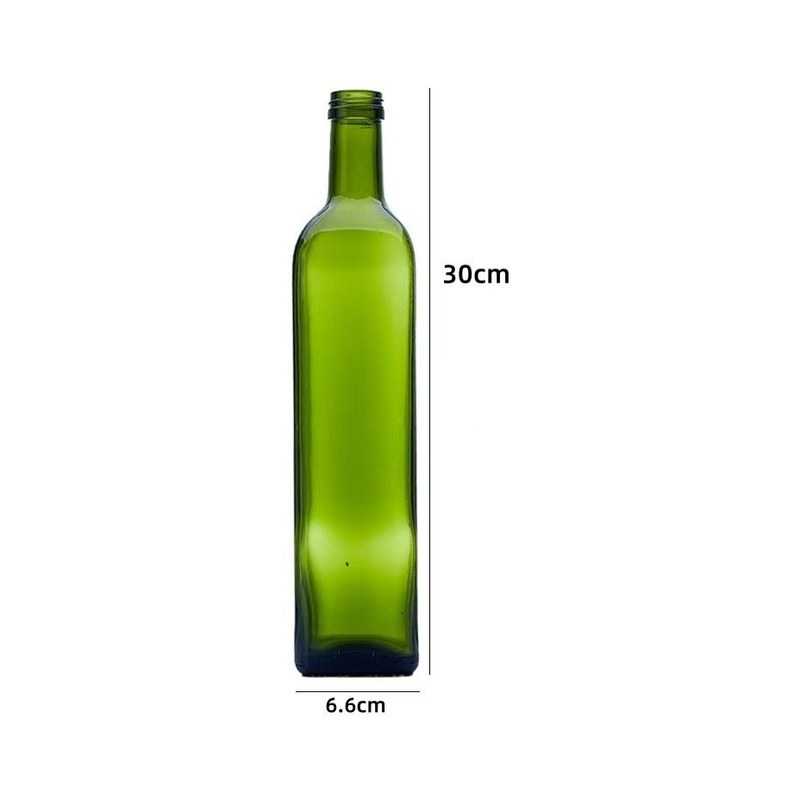
Two shapes, two different advantages. The choice depends less on the oil than on the sales channel — and on one hard number: pallet density.
1. Label area
A square bottle gives flat panels: the label sits down completely, edges do not lift, and a full-wrap label still lands flat on the front. On a round bottle the label wraps a cylinder — perfectly possible, but the printer uses more material for the same visual area.
2. Shelf look
Square bottles standing side by side form a straight line and read as a designed range. Round is classic: for olive oil many buyers expect it, and for a traditional rapeseed or sunflower line it looks familiar rather than cheap.
3. Pallet density — where there is no difference
This is the number people expect to differ and it does not. Our 500 ml square and 500 ml round both go into the same 62.5 × 31.5 × 28 cm carton, 50 pcs, and both give 2 856 pcs per pallet. Container maths is identical, so shape is a free choice commercially.
4. Breakage risk
Square bottles have edges that take impact on a smaller area; round bottles spread it across the curve. In a proper carton with dividers both travel safely — but where manual handling is heavy, round is more forgiving.
How to decide
- Premium brand, modern retail, gift → square.
- Traditional oil, HoReCa, export to familiar markets → round.
- Both lines → keep the same neck and cap so one cap order covers the range.
One practical note: the 750 ml mould we run is square only. If 750 ml is your lead size and you want round, tell us early — it changes the tooling conversation.
Build your oil range on one mould
Send the volume and the city — we reply with pricing, carton and pallet options within one working day.